
Aggression in children can be scary and exhausting for parents, but it is usually a sign of strong emotions and unmet needs, not a “bad child.” With understanding, structure, and the right responses, parents can guide a child toward calmer, more respectful behaviour over time.
What child aggression really means
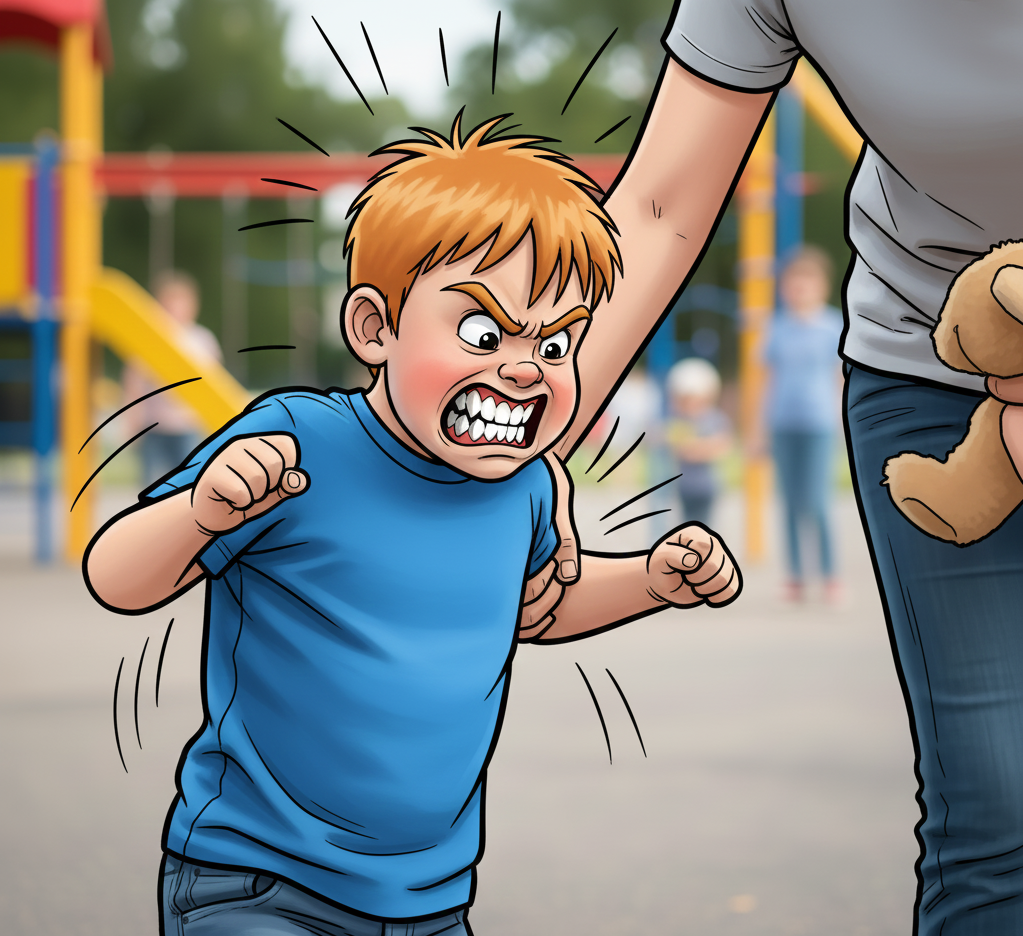
Aggression in children can look like hitting, biting, pushing, yelling, throwing things, or breaking objects. It often appears when a child feels overwhelmed by anger, jealousy, fear, or frustration and does not yet have the words or self‑control to manage those feelings. For younger children especially, aggression is a primitive way of saying, “Something is too big
for me right now.” It helps to remember that aggression is a behaviour, not an identity. Labelling a child as “naughty” or “bad” can make the problem worse because the child starts to believe this is who they are. Seeing aggression as a signal allows parents to stay curious: What is this behaviour trying to tell me?
Common causes and triggers
Many different factors can feed into aggressive behaviour:- Frustration: Difficulty doing tasks, following instructions, or
losing in games can cause outbursts.-
Communication problems: Children who struggle to express themselves with words may use their bodies instead.- Tiredness and hunger: Lack of sleep or food lowers patience and self‑control.-
Overstimulation: Too much noise, crowding, or screen time can make a child irritable and reactive.- Stress at home: Conflict between adults, big life changes, or inconsistent parenting can show up as anger in children.-
Temperament and neurodevelopment: Some children are naturally more intense, sensitive, or impulsive; conditions like
ADHD, autism, or learning difficulties can also make self‑control harder. Often there is no single cause. Instead,
there is a pattern: a tired child, a busy evening, a sibling taking a toy, and suddenly there is hitting or shouting. Looking for patterns helps parents plan better responses.
How parents should respond in the moment
When aggression happens, the first goal is safety and calm, not punishment. If a child is hitting or throwing things, gently but firmly stop the behaviour, move other children away, and remove dangerous objects if needed. Using a calm, low voice is powerful because children “catch” the adult’s emotional state. Short, clear statements work better than long lectures: “No hitting. Hitting hurts. We are taking a break.” Once the child is moved away from the situation (to a calm corner, another room, or a parent’s side), keep talking minimal until the storm passes. Arguing, shouting, or threatening in that moment usually escalates the aggression because the child’s brain is already in “fight” mode. Consistent, predictable consequences help the child learn.
That might mean: if you hit, you are removed from the game; if you
throw a toy, you lose that toy for a short time. The key is to do the same thing each time, without harshness or humiliation. Physical punishment (like hitting back) often increases aggression over time, because it teaches that hitting is an acceptable way to handle anger.
Teaching emotional skills after the storm
The real learning happens after the child is calm. When breathing and body language show that the child has settled,
parents can gently talk about what happened. This is the time to label feelings: “ Teaching simple emotion words (“angry,” “sad,” “worried,” “left out”) gives children tools to express themselves with language instead of fists.
Parents can then offer alternative behaviors: “Next time, say ‘Give it back, please,’ or come to me for help,” or “When you feel that hot feeling, you can squeeze this pillow, stamp your feet on the spot, or take deep breaths.”
Role‑play can be very powerful. Parents and children can act out the same situation but practice a different response. For example, pretend the sibling takes the toy again, and help the child say, “I’m using it now,” or walk away. Rehearsal builds new habits in the brain, just like practicing a sport.
Shaping the environment and routines
Aggression becomes less frequent when the child’s overall life is more balanced. Regular routines for meals, sleep, school, and play give a sense of predictability and safety. A well‑rested, well‑fed child has more capacity for self‑control than a tired, hungry one.
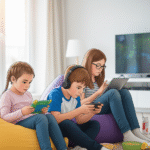
Limiting overstimulation is also important. Too much fast, intense screen time can make children more irritable and
impatient. Setting clear rules about screens (no devices during meals, homework, or right before bed; limited daily use;
age‑appropriate content) protects the child’s nervous system. Providing quiet, calm activities like drawing, reading, blocks, or outdoor play helps to release energy in healthier ways.
Parents can also reduce triggers by arranging the environment: separating toys that often cause fights, giving each child their own special items, or setting clear rules for turn‑taking before play starts. Planning transitions with warnings (for example, “In five minutes we will stop playing and go to dinner”) can prevent sudden outbursts when an activity ends.
Using positive attention and praise
Children repeat behaviors that bring them attention, even if the attention is negative. If parents only react strongly when the child hits or shouts, but rarely notice when the child plays nicely, aggression can unintentionally be reinforced.
Positive attention is a powerful tool.
Catch the child being gentle, sharing, waiting, or using words, and name it
specifically: “You asked so politely,” “You waited for your turn,” “You used your words instead of hitting.” This kind of praise tells the child exactly what behaviour is appreciated and builds their motivation to use it again. Spending small, regular “special time” with the child—30–40 minutes where the parent is fully present, following the child’s lead in play—can also reduce aggressive behaviour. The child feels more secure and connected, which lowers the need to “act out” for attention.
Setting clear rules and boundaries
Children feel safer when they know what is expected. Families can have a few simple rules about behaviour, such as “No
hitting,” “Use kind words,” “Hands and feet to yourself,” and “We talk about problems.” These rules should be explained when everyone is calm, not in the middle of a meltdown. Consequences should be linked to the behaviour and kept
realistic.
For example, if a child hits during a game, the logical consequence is leaving the game for a while. If they throw a
toy, that toy is removed temporarily. Avoid long or vague punishments (“No TV for a month”) that are hard to enforce;
consistency is more important than severity. It also helps when all caregivers (parents, grandparents, teachers when possible) follow similar rules.
Mixed messages
—for example, one adult allowing hitting and another punishing it harshly—confuse the child and make progress slower.
Looking after yourself as a parent
Managing an aggressive child is emotionally draining. Parents who are constantly stressed, angry, or guilty find it much harder to stay calm and consistent. Taking care of personal well‑being is not selfish; it directly supports better parenting. Simple steps like sharing responsibilities with a partner or family member, taking short breaks when possible, talking to trusted friends, or practicing relaxation techniques can make a big difference.
When a parent feels more regulated, it is easier to respond to aggression with firmness and empathy instead of
rage or despair. It is also normal to make mistakes. Every parent sometimes shouts or reacts out of anger. What matters is noticing it, repairing the relationship and trying again. This models taking responsibility and shows the child that everyone is learning.
When to seek professional help
Sometimes aggression is frequent, severe, or not improving despite consistent efforts at home. Warning signs can include: injuries to others, destruction of property, aggression at school, cruelty to animals, or serious self‑harm threats. In these situations, it is important to seek help from professionals such as a pediatrician, child psychologist, or child psychiatrist.
Structured parenting programs and therapies exist that teach step‑by‑step methods for managing difficult behaviour and building a stronger parent‑child relationship. Getting help is not a sign of failure; it is a sign that the parent is taking the problem seriously and wants the best for the child.