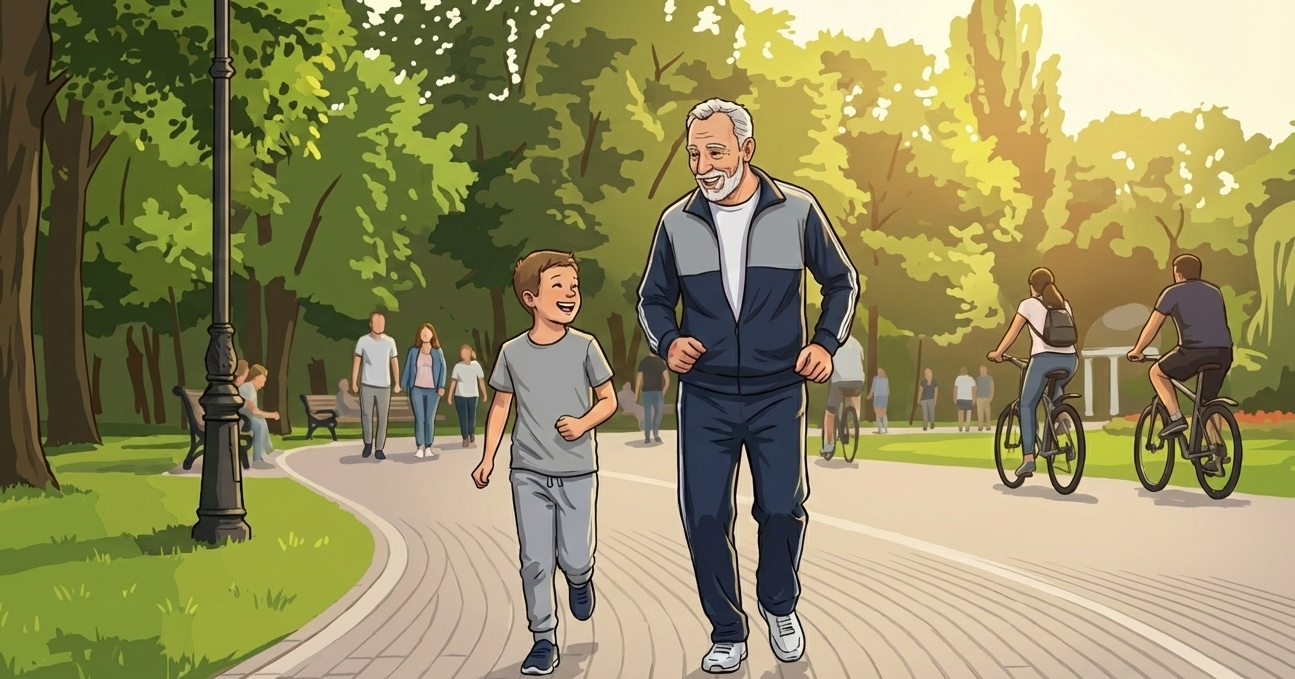

Improving fitness is possible at any age, for every body type, when exercise, nutrition, sleep, and mindset work together
instead of fighting each other. International guidelines show that men and women of all ages benefit from regular
movement and strength work, even if starting late or from a very unfit state.
What “fitness” really means
Fitness is not only about six packs or a “zero figure”; it includes heart health, strength, flexibility, balance, and mental wellbeing. For a 20 year old student and a 55 year old office worker, the ideal body may look different, but the core systems (heart, lungs, muscles, joints, brain) need similar care.
Health organizations recommend at least 150 minutes of moderate activity (like brisk walking) or 75 minutes of vigorous
activity (like running) per week, plus muscle-strengthening exercises on 2 or more days.
Cardio: training your heart and lungs
Cardio (aerobic) exercise strengthens the heart, improves circulation, and helps manage weight and blood sugar.
General weekly target 150–300 minutes of moderate intensity (brisk walking, light cycling, easy swimming), or 75–150 minutes of vigorous intensity (running, fast cycling), or A mix of both.
For different groups:– Beginners/overweight: Start with 10–15 minutes of slow to moderate walking, 5–6 days a week, and build up to 30 minutes.
Busy professionals: 3–4 sessions of 30–40 minutes brisk walking, cycling, or elliptical; add short intervals (1–2 minutes
faster, then 2–3 minutes easy). –
Seniors (60+): Prefer low impact options flat walking, gentle cycling, water aerobics focusing more on consistency
than speed.
Teens/young adults: Sports, running games, dance workouts anything that raises heart rate and feels enjoyable.
Cardio improves mood through endorphins and can reduce risk of conditions like heart disease, hypertension, and type 2 diabetes.
Strength training: essential for all ages
Experts now agree that strength training is not only for bodybuilders; it is necessary for men and women of all ages to
prevent muscle loss, maintain metabolism, and protect bones.
Guideline At least 2 days per week of muscle strengthening activities that work all major muscle groups (legs, hips, back, chest, shoulders, arms, core).
Beginner-friendly full-body plan (2–3 days/week) Squats or chair squats , Push-ups (wall or knee versions if needed) Rows (resistance band, water bottles, or machines) Hip bridges , Planks (on knees or elevated if needed) Perform 1–3 sets of 8–12 repetitions for each exercise, resting 1–2 minutes between sets.
Why this matters for different ages:– 20–40 years: Maximizes muscle and bone peak, strongly protective for later life. 40–60 years: Slows age related muscle loss (sarcopenia) and supports joint health, especially for people with desk jobs.
60+ years: Strength and power training reduce fall risk and maintain independence (getting out of chairs, climbing stairs).
Research shows higher protein intake combined with resistance training significantly improves strength and muscle
mass, especially in older adults.
Flexibility and balance: small time, big impact
Flexibility (stretching) helps maintain joint range of motion, while balance training reduces falls, particularly in older adults. Stretch major muscle groups 2–3 times per week, holding each stretch for 10–30 seconds. For seniors or people with balance issues, add balance work 2–3 times weekly (heel-to-toe walking, single-leg stands near a wall, simple yoga poses). Even 5–10 minutes after each workout or before bed can improve stiffness and make daily movements easier.
Nutrition: fuel that matches your goal
Exercise results are strongly influenced by nutrition. Evidence based guidelines suggest:
Calories and weight goals
For fat loss: Eat in a modest calorie deficit (around 1020% below maintenance) to avoid losing too much muscle.
For muscle gain: A small surplus (around 5–15% above maintenance) combined with strength training works best,
rather than extreme overeating. Online TDEE (Total Daily Energy Expenditure) calculators can estimate daily calorie needs based on age, sex, weight, and activity level.
Protein: key for repair and growth
Research in sports nutrition suggests that active people aiming for muscle maintenance or growth benefit from about 1.6–2.2 grams of protein per kilogram of body weight per day. Sources: eggs, milk, yogurt, paneer, lentils, beans, soy
products, fish, poultry, lean meats. Protein is particularly important for: Older adults (to prevent muscle loss). People dieting for fat loss (to preserve lean tissue).
Carbohydrates and fats
Carbohydrates (whole grains, fruits, vegetables) provide energy for workouts and support recovery.
Healthy fats (nuts, seeds, olive oil, fatty fish) are essential for hormone production and absorption of fat-soluble vitamins.
Balance matters: extremely low-carb or extremely low fat diets can be hard to maintain and are often unnecessary unless medically indicated.
Sleep and recovery: where progress is made
Several expert groups, including sleep medicine societies, recommend at least 7 hours of sleep per night for most adults
to maintain health. Sleeping less than this regularly is linked with higher risk of obesity, diabetes, and cardiovascular
disease.
For fitness: Good sleep supports muscle recovery, hormone balance, appetite control, and exercise performance. Poor sleep can increase hunger, reduce training motivation, and slow progress.
Practical tips:-
Maintain a regular sleep schedule.
Avoid heavy meals and screens close to bedtime.
Use light activity (easy walking, stretching) on “rest days” to support recovery rather than complete inactivity.
How to adjust by life stage and condition
Children and teenagers
For children and adolescents, experts recommend at least 60 minutes per day of moderate to vigorous physical activity, mostly aerobic, plus strength and bone strengthening activities several times per week. Active play, sports, and games are usually best.
Adults 18–64
Most adults should aim for the standard 150–300 minutes of moderate or 75–150 minutes of vigorous activity plus 2+
strength days. People with sedentary jobs can break up long sitting with short walking breaks every 30–60 minutes.
Older adults 65+
Guidelines are similar but with extra emphasis on balance and fall prevention. If they cannot achieve 150 minutes, they
should be as active as their ability allows; even small increases in movement show health benefits.
People with medical conditions
Those with heart disease, diabetes, arthritis, or other chronic illnesses should consult healthcare professionals before
starting or significantly changing exercise programs. In many cases, adapted physical activity is part of treatment, but
intensity and type must be individualized.
Common mistakes and how experts suggest avoiding them
Research and clinical experience show several patterns that slow progress. Doing too much too soon Leads to injury or burnout; experts recommend gradual progression (around 5–10% per week increase in volume or intensity).
Ignoring strength training Cardio alone can reduce weight but may also cost muscle; combining both gives better
body composition and long-term health.
Relying only on the scale Body measurements, how clothes fit, and fitness tests (e.g., how many push-ups or how
far you can walk in 6 minutes) give a more complete picture. Experts emphasize consistency over perfection: small daily
actions over months matter more than short periods of extreme effort.
Putting it together: a sample weekly structure
For a generally healthy adult (any gender) with limited time, an expert-aligned plan might look like this:
Day 1: 30–40 min brisk walk + 15 min strength (squats,
push-ups, rows).
Day 2: 20–30 min cycling or light jog + stretching.
Day 3: Strength 30–40 min (full body: legs, core, upper
body).
Day 4: Rest or gentle yoga/walk.
Day 5: 30–40 min brisk walk with short fast intervals.
Day 6: Light activity (family walk, sports, housework).
Day 7: Rest/sleep focus.
This can be scaled up or down depending on age, health status, and experience.
Final perspective
Across age groups and body types, the science is consistent: move regularly, strengthen muscles, eat balanced food rich in protein and whole foods, prioritize sleep, and progress gradually. The exact exercises and intensity will differ for a teenager, a busy parent, and a senior, but the pillars stay the same.