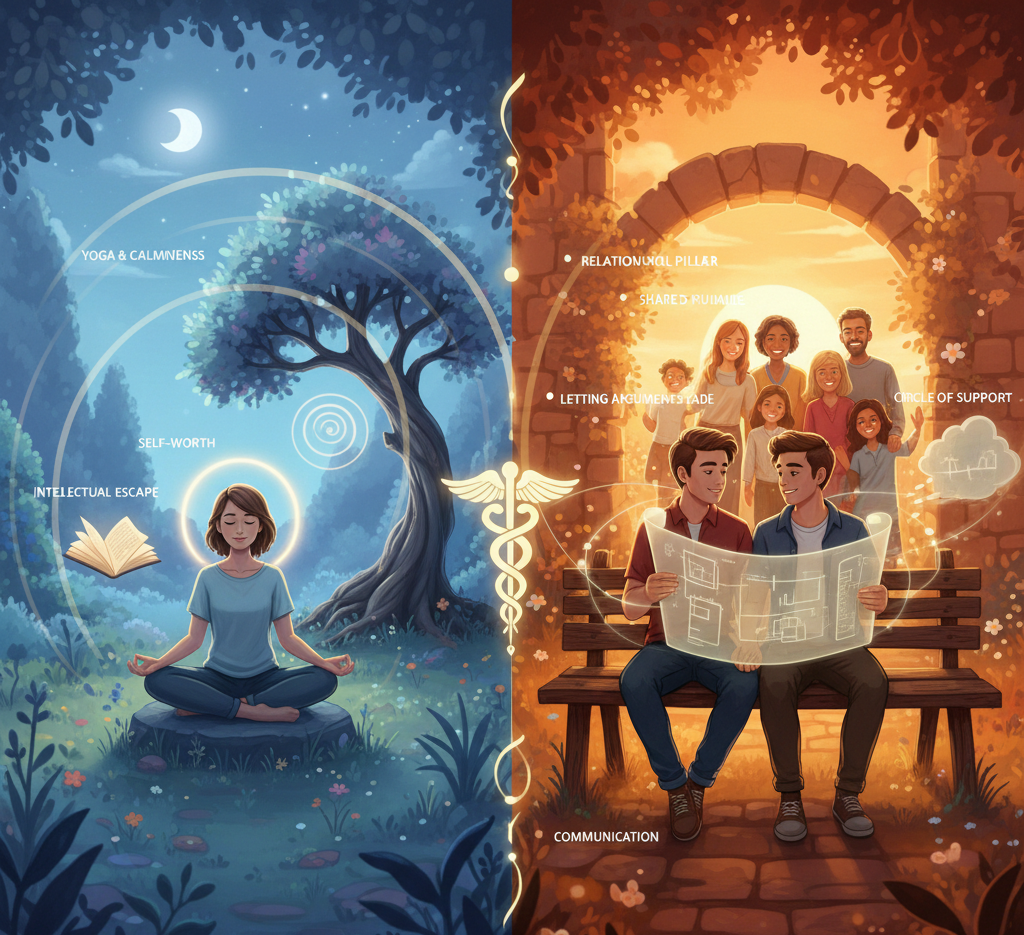

In an era where we are digitally tethered to thousands, a silent shadow has grown. a deep, pervasive sense of being “sad and alone.” While we often treat these feelings as personal failures or temporary “blues,” the world’s leading psychological and medical experts reveal a different story. They suggest that our feelings of isolation are not just emotions. They are biological signals, public health crises, and even keys to a more authentic life.
The Survival Signal: Why Loneliness Hurts
The late Dr. John Cacioppo transformed our understanding of loneliness by identifying it as a biological “alarm bell,” much like hunger or thirst. Just as the pain of hunger drives us to find food, the pain of loneliness is designed to drive us back to the safety of the group.
However, when this “alarm” rings too long, it changes how our brain works. Cacioppo identified a state called social hyper vigilance, where a lonely person’s brain begins to see the world as more threatening. A neutral glance from a stranger is interpreted as a scowl; a delayed text feels like a rejection. This creates a self fulfilling prophecy where the lonely person withdraws to stay “safe,” only to become more isolated.
The Physical Toll: More Than a Feeling
If Cacioppo gave us the “why,” Dr. Julianne Holt-Lunstad gave us the “how much.” Her groundbreaking research shifted loneliness from a “soft” psychological issue to a “hard” medical one. By analyzing data from millions of people, she found that a lack of social connection carries a health risk comparable to smoking 15 cigarettes a day.
Social isolation isn’t just a mood; it is a physical stressor that increases inflammation and weakens the immune system. Her work suggests that “Social Health” should be treated with the same urgency as nutrition and exercise.
The Secret to the “Good Life”
While many of us chase wealth or fame to find happiness, Dr. Robert Waldinger, director of the 85 year old Harvard Study of Adult Development, points to a different North Star. The study’s clearest message across nearly a century is that the quality of our relationships is the single most important predictor of our health and happiness.
It isn’t the number of friends you have, or whether you are in a committed relationship, but the quality of those bonds. Warm, protective relationships literally buffer us from the “slings and arrows” of aging and physical pain.
Moving Toward a “Social Medicine”
Dr. Vivek Murthy, the U.S. Surgeon General, has taken these scientific findings and turned them into a call for national action. He views loneliness as a public health epidemic that requires “social infrastructure” parks, community centers, and shared service.
Murthy emphasizes that the antidote to feeling alone is often service. By helping others, we shift our focus from our own perceived “lack” to our capacity to give. He suggests that just 15 minutes of undivided “presence” with a loved one each day can begin to heal the nervous system.
Embracing the Existential Gap
Finally, Dr. Irvin Yalom offers a philosophical comfort. He speaks of “Existential Isolation” the reality that we are born alone and die alone, and that no one can ever fully inhabit our inner world.
While this sounds bleak, Yalom argues that accepting this “unbridgeable gap” is the first step toward true intimacy. When we stop demanding that another person “complete” us or perfectly understand us, we are finally free to see them as they truly are. We connect not as two halves, but as two whole beings acknowledging the mystery of each other.
From Isolation to Inner Power: 6 Pillars for Overcoming Loneliness
Loneliness is often seen as a void, but it can also be a fertile ground for growth. While it is natural to feel a sense of sadness when we are alone, these moments offer a unique opportunity to stop looking outward for validation and start looking inward for strength.
If you are currently navigating a season of loneliness, here are six transformative ways to turn that experience into a source of calmness and personal power.
1. The Intellectual Escape: Books and Creative Engagement
When you feel lonely, your world can feel small. Reading books or engaging in new activities expands your horizons. A book is more than just paper; it is a conversation with a great mind from the past or present.
- The Benefit: Immersing yourself in a hobby or a story breaks the “hyper vigilance” loop of loneliness by giving your brain a productive focus. It reminds you that the world is vast and full of ideas yet to be explored.
2. Yoga: Finding Calmness Amidst the Storm
Yoga is often misunderstood as just physical exercise. In reality, it is a tool for emotional regulation. Yoga does not remove the challenges of life, but it gives you the power and calmness to handle them.
- The Practice: Through breathwork and movement, Yoga lowers your cortisol (stress hormone) levels and more than that. It teaches you to stay present in your body, transforming the “ache” of loneliness into a sense of grounded stability.
3. The “Precious” Principle: Prioritizing Your Self-Worth
The most important relationship you’ll ever have is the bone you have with yourself. You must understand that you are precious. When you stop waiting for others to choose you and start working on yourself, your energy changes.
- The Result: Self-improvement whether it’s learning a skill, fitness, or mental health builds a magnetic confidence. When you value yourself, you no longer “need” people to fill a gap, which ironically makes you the kind of person others are drawn to.
4. Cultivate a Broad Mindset
Life is a series of seasons, and a broad-minded approach helps you navigate the highs and lows. Understanding that things will sometimes go well and sometimes go poorly prevents you from spiraling when you are alone.
- The Perspective: Acceptance is key. By recognizing that loneliness is a temporary “bad” stretch in a much larger journey, you stop panicking and start observing. This mental flexibility is the hallmark of emotional maturity.
5. Loneliness as a Mirror for Inner Ability
There is a profound difference between being “lonely” and being “alone.” Sometimes, loneliness is the best way to understand your inner ability. Without the noise of other people’s opinions, you can finally hear your own voice.
- Discovery: Use this quiet time to identify your strengths and hidden talents. Solitude is the laboratory where the “inner self” is tested and refined. Many of history’s greatest ideas were born in the silence of isolation.
6. The Spiritual Anchor
Staying spiritual provides a sense of belonging that transcends human interaction. Whether through prayer, meditation, or a connection to nature, spirituality reminds you that you are part of a much larger design.
- The Connection: Spirituality provides an “internal home.” It offers the comfort that even when you are physically alone, you are spiritually supported. It shifts the focus from what you lack to the abundance of the universe.