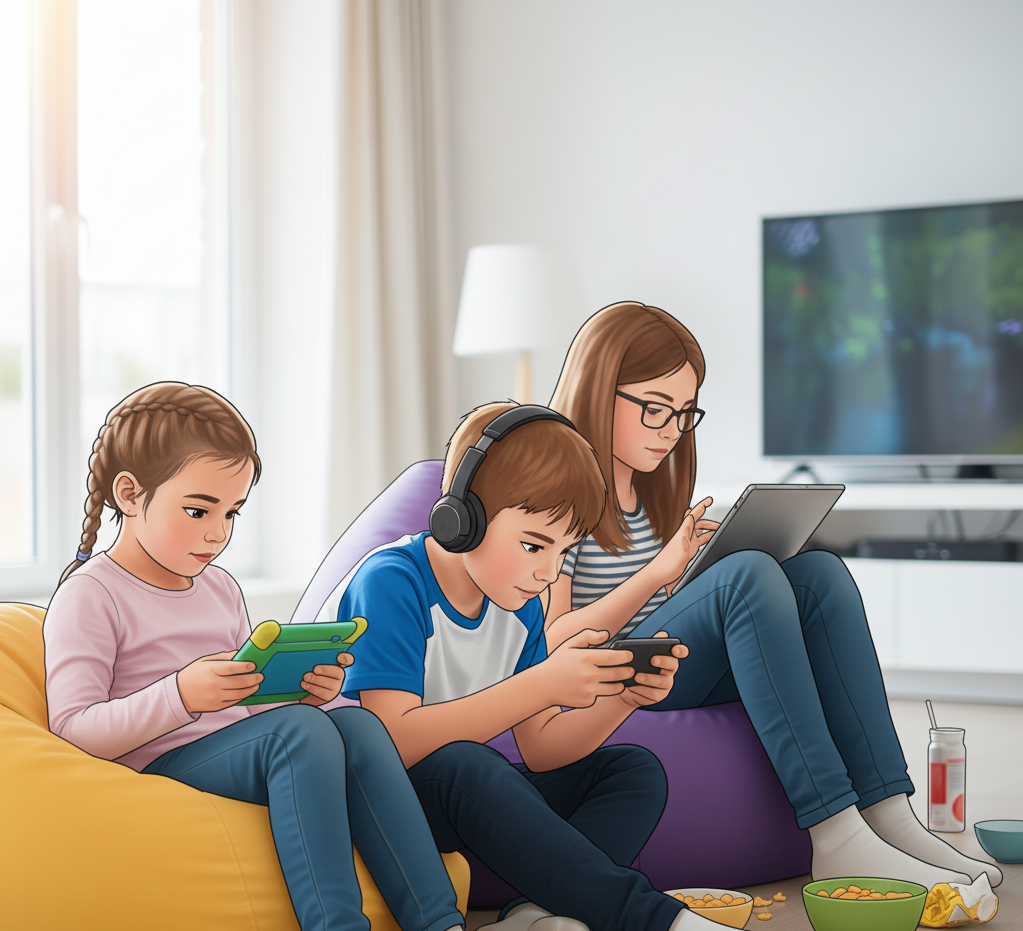

Using mobile devices in childhood can affect the body, brain, and behaviour in ways most parents do not fully see in the
moment. limiting or delaying mobile use for children is one of the best long‑term health decisions a family can make.
Developing brain and learning
Children’s brains are still wiring core skills like attention, emotional control, language, and problem‑solving. Constant
mobile use floods them with fast‑changing images and quick rewards, which trains the brain to prefer instant stimulation
instead of deep focus.
Over time, this can make it harder for a child to concentrate on schoolwork, read for long periods, or stay with a difficult task without getting bored quickly. Real learning in childhood comes from active experiences: touching, moving, exploring, asking questions, and interacting with real people. When a child spends hours passively consuming videos or games, that active learning time shrinks.
This can slow the development of language, creativity, and critical thinking. A child may know many cartoon characters
but struggle to explain feelings, tell a story, or solve real‑life social problems.
Sleep and body clock damage
Blue light from mobile screens sends a strong “daytime” signal to the brain, especially in the evening and at night. When
children use phones close to bedtime, their natural sleep hormone (melatonin) is delayed, and they take longer to fall
asleep. Even if they fall asleep, the quality of sleep is often lighter and more disturbed.
Over time, poor sleep in children is linked to weaker immunity, mood swings, lower school performance, and increased risk of obesity. Many children also keep devices near their pillow or under it, with notifications, vibrations, or the temptation to “just check once.” This further cuts into deep sleep. Healthy brain development and growth hormone release depend on long, uninterrupted sleep. Removing mobiles from bedrooms and having a “screens‑off” time at least 1–2 hours before bed greatly supports a child’s body clock and overall health.
Behaviour, attention, and addiction‑like patterns
Mobile apps and games are designed to keep users engaged with endless scrolling, rewards, and surprises. Children are
especially vulnerable to this design because their self‑control systems are immature. As a result, many children show
addiction‑like patterns: tantrums when the phone is taken away, constantly asking for the device, sneaking extra time, or losing interest in offline activities.
Excessive mobile use can also worsen attention problems. A child used to constant switching between apps and videos may find real life “too slow.” This can look like restlessness, impatience, or difficulty listening in class. In some children,
high screen time is associated with more aggressive behaviour, irritability, and poor frustration tolerance, especially when they consume fast, loud, or violent content.
Emotional health and mental wellbeing
Children need face‑to‑face connection to learn how to recognise emotions, read body language, and respond with
empathy. When mobile screens replace family conversations, play with peers, and shared activities, emotional skills can lag. Children may struggle to express feelings in words and instead show them through behaviour like anger or withdrawal.
For older children and teens, mobiles also open the door to social media pressures, comparison, cyberbullying, and
unrealistic standards of beauty and success. Even younger kids can become overly focused on likes, comments, or characters, which affects self‑esteem. A child’s sense of self may start depending on what happens on the screen rather than real‑world experiences and relationships.
Physical health and posture
Long periods on mobiles mean long periods of sitting. Children may slump on sofas or beds with bent necks and rounded
shoulders, creating “text neck” and early posture problems. Over time, this can cause neck, shoulder, and back pain, even in young kids. The eyes also work hard to focus on a small bright screen at close distance, which may contribute to digital eye strain, headaches, and discomfort. Reduced physical activity is another major concern.
Time spent with mobiles replaces running, jumping, outdoor games, and sports. This lack of movement increases the risk of weight gain, weak muscles, and poor coordination. Active play is not only important for physical fitness but also for confidence, resilience, and social skills.
Social skills and family relationships
When a child spends a lot of time on a phone, there is less time for talking with parents, playing with siblings, and interacting with friends in real life. These real‑world social experiences teach sharing, turn‑taking, handling conflicts, and understanding others’ feelings. Without enough of them, a child might feel lonely even while being constantly “connected” online.
Mobiles can also damage family relationships quietly. If a child is always with a device at meals, in the car, or during outings, small daily chances to bond disappear. Parents may also be on their own phones, creating a double barrier. Setting family rules like “no phones at the table” or “no screens during conversations” helps children feel heard and valued, and teaches them that real people come first.
Exposure to inappropriate and unsafe content
Mobiles connect children to a huge, mostly uncontrolled world. Even with filters, it is hard to completely block violent, sexual, or disturbing content. A single unexpected video or image can frighten a child or confuse their understanding of relationships and safety.
Children can also be exposed to harmful challenges, misinformation, or online strangers. Young children do not have the judgment to recognise what is unsafe or manipulative. They may click links, share personal information, or believe everything they see. Delaying mobile use and closely supervising any access reduces the risk of exposure to such dangers. Teaching children basic digital safety starts with limiting independent device use in early years.
Radiation and long‑term unknowns
Mobile phones emit radiofrequency electromagnetic fields. While current evidence does not clearly prove serious harm at normal levels of use, the long‑term effects of starting heavy exposure in early childhood are still not fully understood.
Children’s skulls are thinner, and their brains are still developing, which may make them more vulnerable than adults.
Because science is still evolving, many health organizations recommend precaution, especially for children. That means
using hands‑free options, keeping devices away from the body when possible, and avoiding unnecessary use. The safest
approach for young kids is simply to keep mobile use very low and not treat the phone as a toy or constant companion.
Healthy alternatives and balanced habits
Saying “no mobile for children” is easier when there are attractive alternatives. Parents can focus on creating an
environment rich in:
Physical play: running, cycling, ball games, dancing
Creative activities: drawing, building, music, crafts
Reading and storytelling: books, audiobooks, making up
stories
Social time: playdates, family board games, outdoor trips
When digital tools are introduced later, they should come with clear rules: time limits, no devices during meals or before bed, only age‑appropriate content, and always under adult guidance for younger kids. The goal is not to create fear of technology but to protect developing brains and bodies until children are mature enough to use it wisely. Protecting children from early and excessive mobile use is an investment in their attention, sleep, posture, emotions, and
relationships. By delaying and limiting mobiles, parents give their children the best chance to grow strong, curious, and
connected to the real world first.