
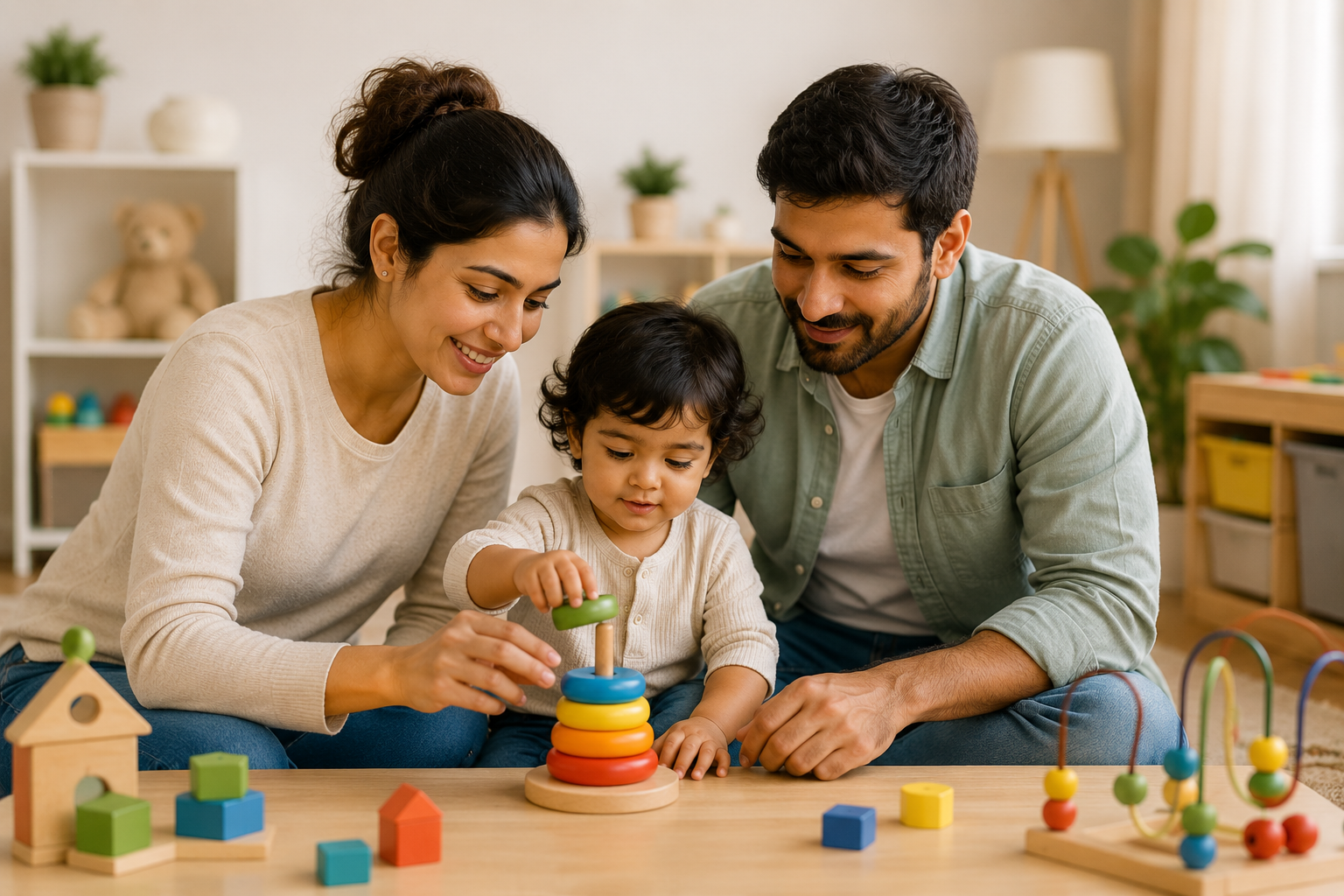
Teaching a toddler is one of the most beautiful and challenging experiences for parents. During the early years, children are not learning through textbooks or strict instructions. They learn through observation, emotions, repetition, sounds, play, and the environment around them. Many parents worry when toddlers do not listen immediately or lose interest quickly, but experts believe this is a completely natural part of child development.
Unlike older children, toddlers are still discovering how the world works. Their attention span is short, their curiosity is high, and their brains are developing rapidly every single day. Because of this, the best teaching methods are often the simplest ones.
Toddlers Learn More by Watching Than Listening
One of the biggest mistakes adults make is assuming toddlers learn through long explanations. In reality, young children understand actions better than words. They closely observe parents and often imitate behavior before understanding its meaning.
For example, a child may refuse to brush their teeth when repeatedly instructed to do so. However, if parents brush their own teeth with excitement and involve the child in the process, toddlers are more likely to participate naturally. Experts often describe this as “model-based learning,” where children copy what they regularly see.
This is why parents are encouraged to demonstrate good habits instead of constantly giving verbal instructions.
Small Instructions Work Better Than Long Conversations
Toddlers process information differently from adults. Long sentences can confuse them because their language comprehension is still developing. Simple and direct communication is far more effective.
Instead of saying:
“Please clean all your toys and organize them properly.”
Parents can say:
“Put toys in basket.”
Short instructions are easier for toddlers to understand and follow. Over time, repeated exposure helps improve language development naturally.
Repetition Is a Major Part of Learning
Parents often become frustrated when toddlers repeat the same mistakes. However, child development specialists explain that repetition is one of the most important ways young children learn.
Toddlers may need to hear or practice something dozens or even hundreds of times before fully understanding it. This does not mean they are not intelligent. Their brain is simply building memory and behavioral connections gradually.
Whether learning colors, words, routines, or social behavior, repetition helps strengthen understanding over time.
Play Is the Natural Classroom for Toddlers
For toddlers, play is not just entertainment. It is one of the most effective learning tools. Activities that seem simple to adults often help children develop communication skills, coordination, emotional understanding, creativity, and problem-solving abilities.
Parents can teach basic concepts through ordinary games and activities:
- Counting steps while walking
- Naming colors during playtime
- Identifying animals in picture books
- Singing rhymes and action songs
- Sorting shapes and objects
Learning through play keeps toddlers emotionally engaged, which improves memory and participation.
Emotional Connection Improves Learning
Research consistently shows that toddlers learn better when they feel emotionally safe. Children respond strongly to tone of voice, facial expressions, and emotional reactions.
A calm and encouraging environment helps toddlers stay curious and confident. On the other hand, shouting, fear, or pressure can reduce a child’s willingness to learn.
Experts encourage parents to celebrate effort rather than perfection. Instead of only praising results, they recommend phrases such as:
- “You tried very well.”
- “Good job for trying.”
- “You did that yourself.”
This type of encouragement builds confidence and supports emotional development.
Daily Activities Can Become Learning Opportunities
Teaching toddlers does not require expensive toys or structured lessons. Everyday moments can become valuable learning experiences.
In the kitchen, parents can teach counting using fruits or vegetables. During bath time, toddlers can learn body parts and basic science concepts like floating and sinking. Outdoor walks can introduce children to colors, birds, vehicles, sounds, and nature.
Experts believe children often learn best when education becomes part of normal life instead of a formal activity.
Reading and Music Play an Important Role
Reading picture books regularly helps toddlers develop language, listening ability, imagination, and memory. Even short reading sessions each day can support brain development significantly.
Similarly, music and rhymes are powerful learning tools during early childhood. Toddlers often remember songs faster than spoken instructions because rhythm and repetition strengthen memory.
Simple musical activities such as clapping games, nursery rhymes, and interactive songs can improve language learning while keeping children engaged.
Patience Matters More Than Perfection
Parents sometimes compare their child’s development with others, especially during the toddler years. However, experts warn that every child develops at a different pace.
Some toddlers speak early. Others become physically active first. Some learn routines quickly, while others take more time adjusting.
Tantrums, distraction, stubbornness, and emotional outbursts are also common during this stage because toddlers are still learning how to express emotions and manage frustration.
Teaching toddlers is not about achieving perfect behavior instantly. It is about creating consistency, emotional security, and opportunities for gradual learning.
Common Mistakes Parents Should Avoid
Child specialists often advise parents to avoid:
- Excessive screen time
- Comparing children with others
- Teaching through fear or shouting
- Expecting fast results
- Overloading toddlers with too many lessons at once
Instead, experts recommend focusing on small, repeated learning experiences in a calm and supportive environment.
The Real Foundation of Early Learning
At its core, toddler learning depends heavily on connection. Children learn best from people who make them feel safe, understood, and emotionally supported.
A toddler may forget specific lessons over time, but they often remember how learning felt around certain people. Parents who teach with patience, warmth, and consistency usually create stronger emotional and developmental foundations for their children.
In the early years, learning is less about pressure and more about presence. Small daily moments of attention, conversation, play, and encouragement often become the most meaningful lessons of all.